


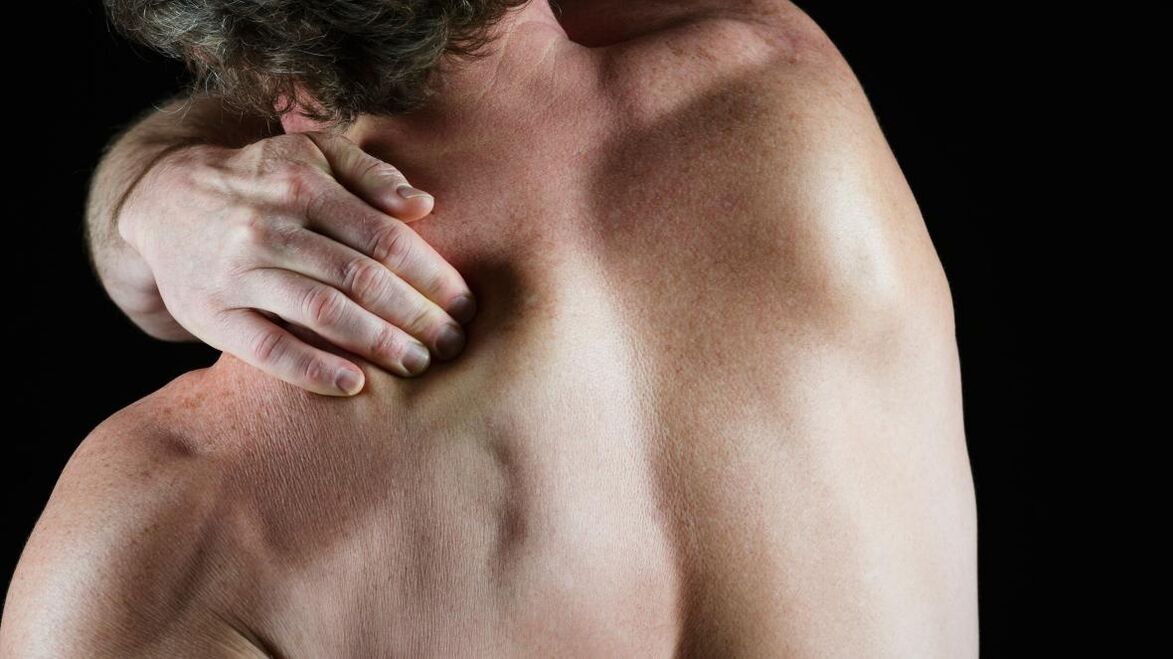
Pain under the left shoulder blade from the back from the back occurs in all age categories of the population, both young children and the elderly.
This fact is due to a huge number of reasons that cause negative sensations, from long-term exposure to an uncomfortable position for the body to severe pathologies in the body.
A bit of anatomy
The scapula is a flat triangular bone located at the back of the chest in the area from the 2nd to the 7th rib.It performs binding, protective, strengthening and motor functions.
The scapula connects the girdle of the upper limbs to the arms and chest hair.It protects the shoulder joint and protects the lungs and aorta from mechanical stress.Certain muscles that extend from the shoulder blades are designed to strengthen and support the shoulder joints.Thanks to these parts of the skeleton, the mobility of the shoulder girdle is ensured;their functions extend even to the lower limbs.The bone is equipped with nerve roots that emerge from the cervicothoracic region.
Classification
The reasons for pain in the area of the shoulder blades on the left side are quite diverse.Pain may occur;
- painful;
- like a dull ache;
- with increased intensity;
- sharp, when you catch your breath;
- withdrawal;
- burning;
- permanent, imperishable;
- piercing (lumbago);
- pressing;
- pulsating;
- dotted.
Important!Often, the cause of pain is prolonged stay of the body in an uncomfortable position, as well as muscle strain due to physical activity.They pass on their own and usually do not require medical intervention.
Prolonged pain syndrome, as well as its systematicity, makes consultation with a specialist necessary.Acute pain in the area of the left scapula requires urgent medical intervention, because... the factor does not exclude the occurrence of angina pectoris, worsening of stomach ulcers or activation of inflammatory processes in the pancreas.
Pain affecting the lower part of the left scapula from the back is often the result of injuries, diseases of the musculoskeletal system and pathologies of internal organs.
Musculoskeletal system
Pathologies of the musculoskeletal system are caused by various injuries:
- fractures and cracks caused by impacts, falls, traffic accidents, etc.The aching pain intensifies when the person moves.Also, the damaged area swells, a bruise appears, and mobility decreases;
- dislocations, which are observed in rare cases and occur when there is a strong pull of the hand or a blow to the scapula.In this case, the bone rotates, moves and assumes an abnormal position.Its lower edge is squeezed between the ribs.
The muscles that connect the scapula to the spine are subject to excessive strain, causing stretching and possible rupture.
Pain in the area of the left scapula on the back caused by the injury occurs immediately after the injury and disappears only when the patient recovers.
In addition to injuries, pain in the area of the scapula from the back is often caused by diseases of the musculoskeletal system.
The pain syndrome below the scapula, which is a consequence of cervical osteochondrosis (dystrophic-degenerative processes in the intervertebral discs of the spine), is spontaneous and can be painful and pulling.Increased pain is observed when a person remains in a sitting position for a long time and during physical exertion.Taking medication does not bring relief.
A pinched, inflamed intercostal nerve causes unbearable pain in the sternum, in the area where it lies.The syndrome intensifies when a person moves, coughs, rains, takes deep breaths and changes body position.The syndrome of constant or paroxysmal pain is sharp, strong, bursting in nature.Sometimes the pain manifests itself in the area of the heart, in the lower back and affects the neck and arms.It can also affect the scapula.
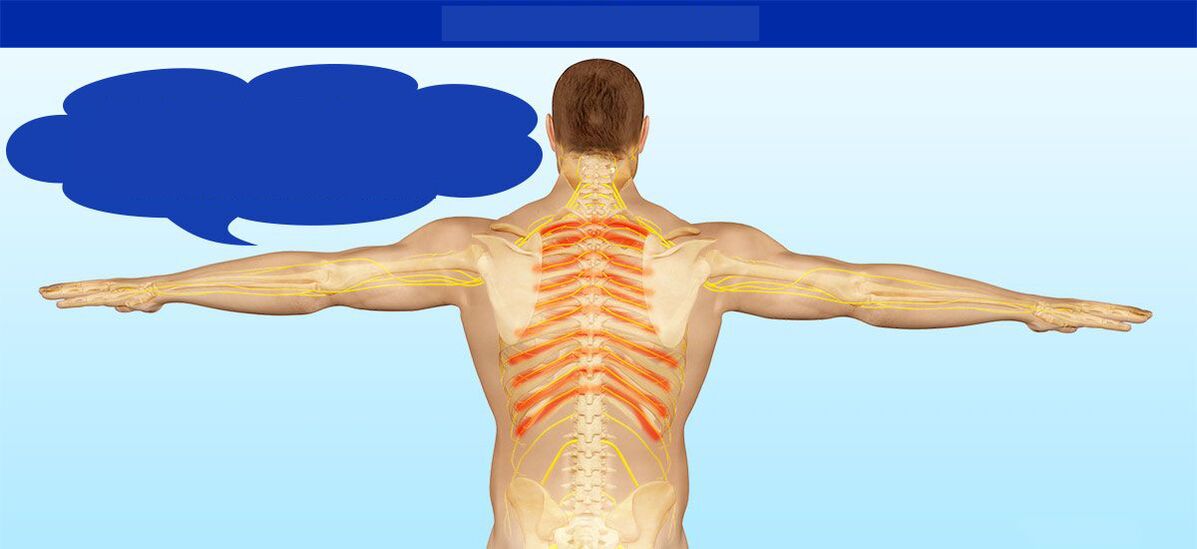
Manifestations of intercostal neuralgia are similar to symptoms caused by heart problems, cholecystitis, angina pectoris and pleurisy.Only a qualified specialist can make a correct diagnosis.
When inflammation of the shoulder tendon and capsule of the shoulder joint occurs without damage to the joint itself and the cartilage (humeral periarthritis), the pain affects the shoulder joint, sometimes the area between the shoulder blades and the bone itself.At night they are sharp and intensified.The disease is accompanied by slight swelling of the shoulder, elevated temperature in the range of 37-37.4ºS and limited circular movements of the shoulder.The pathology is widespread and is diagnosed as a result of injuries, bruises and increased load on the shoulder joint.
With inflammation of the cervical muscles (myositis), caused by overexertion or infection, severe pain affects the entire cervical-brachial region, radiating to the scapula, occipital region and arms.
Pain in the muscles in the shoulder blade area is caused by physical strain or impact on the bone.
Pain due to malignant lesions of the bone structure or soft tissues refers to the initial manifestation of the disease.At first, they do not differ in intensity and appear periodically, which makes timely diagnosis difficult.The development of pathological processes leads to an increase in the severity of negative sensations that haunt a person even at rest, mostly at night.It is not eliminated by non-narcotic analgesics.Then there is bone deformation, swelling of the surrounding tissues, changes in the skin over the malignant focus, and fractures that are not related to trauma.
In the presence of an inflammatory process in the bone (osteomyelitis) caused by streptococcus, staphylococcus, salmonella, E. coli and other infectious agents, the patient is exposed to high temperature, chills and rapid heartbeat.There are complaints of back pain in the scapula and muscles, which decrease when the abscess is opened.
Keep in mind!Painful manifestations below or above the left scapula and in the bone area are characteristic of congenital anomalies.These include aplasia (absence of organs), hypoplasia (underdevelopment of bones), pterygoid scapula and Sprengel's disease.At the same time, the person often suffers from cosmetic defects and limited motor activity.
Intervertebral hernia and bulging discs of the cervical spine lead to compression of the nerve roots by bony formations, which causes pain when moving, especially when tilting the head.
Heart and blood vessels
Back pain under the left shoulder blade is often the result of problems in the cardiovascular system.
Substernal pain in the central part or to the left, with extension to the upper part of the body, signals a myocardial infarction.At the same time, a strong burning sensation can be noticed under the left shoulder blade from the back.It is impossible to clearly characterize the pain syndrome.It can be painful, or it can manifest itself in an acute form.
Lack of blood supply to the myocardium causes an attack of angina, characterized by pressure or constriction of retrosternal pain, which often radiates to the left shoulder blade, arm and lower jaw.At the same time, blood pressure may increase, sweating and pallor may occur.

Angina attacks usually occur in stressful situations or due to increased physical activity.They are treated with nitroglycerin.When the pain lasts longer than 20 minutes or drugs do not provide relief, the presence of a myocardial infarction can be assumed.
High blood pressure or atherosclerotic lesions lead to aneurysm (enlargement) or aortic dissection (incomplete rupture or tearing of the endothelium with subsequent spread of blood between the layers of the vessel wall).
Small aneurysms do not manifest themselves in any way.As they increase, the person begins to feel a dull pain in the back.Dissecting aneurysm is characterized by a distinct clinical picture.When a tear occurs, the pain is sharp and short-lived.It affects the chest and back, leading to a reflex drop in blood pressure and fainting.After a certain time, the person feels burning pains in the chest, arms, neck, under the left shoulder blade.The syndrome cannot be eliminated using available drugs.In this condition, death is very possible, so emergency medical assistance is necessary.
Pain under the left shoulder blade is caused by:
- ischemia - lack of blood flow to the heart;
- pericarditis – inflammatory processes in the pericardium;
- endocarditis - inflammatory disease of the inner lining of the heart;
- myocarditis – inflammation of the heart muscle.
Disturbances in the autonomic nervous system cause vegetative-vascular dystonia.The disease is characterized by numerous manifestations, including pain under the left shoulder blade, similar to heart pain.In addition, the person suffers from irritability, memory impairment, increased sweating, etc.
Respiratory organs
Pain under the left shoulder blade due to respiratory diseases is not excluded.
With left pneumonia, a slight pain in the chest or under the left shoulder blade is observed - dull, painful in nature, which intensifies during movement or deep breathing.Associated symptoms include fever to critical levels, shortness of breath, difficulty breathing, etc.
When necrotic cavities are formed in the left lung, accompanied by inflammatory processes and the formation of pus, pain is observed in the chest area, in some cases radiating to the scapula.Pathology is accompanied by cough with purulent sputum, difficulty breathing and lack of air during breathing.
The diagnosis of left-sided pleurisy (accumulation of fluid in the pleural cavity) is based on the following symptoms: acute chest pain, sometimes radiating below the shoulder blade, elevated temperature, difficulty breathing, dry cough and other manifestations.
Important!Almost all diseases of the respiratory system, accompanied by pain, are characterized by different types of cough.
The appearance of pain under the left shoulder blade is also possible due to acute bronchitis, tracheitis or tracheobronchitis.
Gastrointestinal tract
Pain in the area of the left scapula is often characteristic of pathologies of the gastrointestinal tract and requires urgent medical intervention.
Ulcerative lesions of the stomach and duodenum are characterized by paroxysmal pain.They are caused by prolonged starvation.They can appear immediately after eating or later.
Perforated ulcers cause acute unbearable pain, accompanied by fever, nausea, vomiting, etc.Failure to provide assistance to the patient within 12 hours of the onset of the illness leads to acute intoxication and may cause the patient's death.
Acute inflammation of the pancreas causes pain in the upper, middle or left part of the abdomen.In some cases, they extend below the shoulder blade.Pathology causes nausea, vomiting, flatulence and other disorders of the digestive system.
Some injuries cause the spleen to rupture.This does not lead to immediate internal bleeding, but causes a dull ache under the left shoulder blade.In such cases, delaying treatment can cost the patient his life.
In addition, spasm of the esophagus, calculous cholecystitis, gastroesophagitis and reflux are to blame for pain in the area of the left shoulder blade.
Diagnostic methods, treatment
In any case, the specialist asks the patient about accompanying manifestations, palpates the painful area, determines blood pressure and heart rhythm stability in order to rule out pathological processes that may require immediate action.

Self-diagnosis is strictly prohibited.If your back hurts for no reason for a long time, you need to visit a therapist who, based on the general clinical picture, will determine the need for special diagnostics.
Precise determination of the cause of the pathology is carried out using:
- general and biochemical blood tests;
- urinalysis;
- X-ray for possible problems with the musculoskeletal system and respiratory organs;
- electrocardiogram to rule out heart disease;
- computed tomography and magnetic resonance with insufficient data obtained from radiography;
- fibrogastroduodenoscopy in suspected diseases of the gastrointestinal tract.
Depending on these diagnostic measures, the therapist determines why the pain manifests, then gives a referral to a specialist doctor (traumatologist, vertebrologist, cardiologist, gastroenterologist or neurologist) who determines the treatment regimen.
Important!In pain under the left shoulder blade, analgesics only weaken the syndrome and often prevent a reliable diagnosis.Medicines that relieve pain should only be prescribed by a specialist as part of a comprehensive treatment.
There is no universal remedy for pain under the left shoulder blade.As the patient recovers, the negative symptom will gradually disappear.Therapy is aimed at eliminating the underlying disease and includes a number of methods.
To avoid pain in the shoulder blades, you should take care of your health and if a negative symptom appears, immediately seek the help of a specialist.